 Skip to content

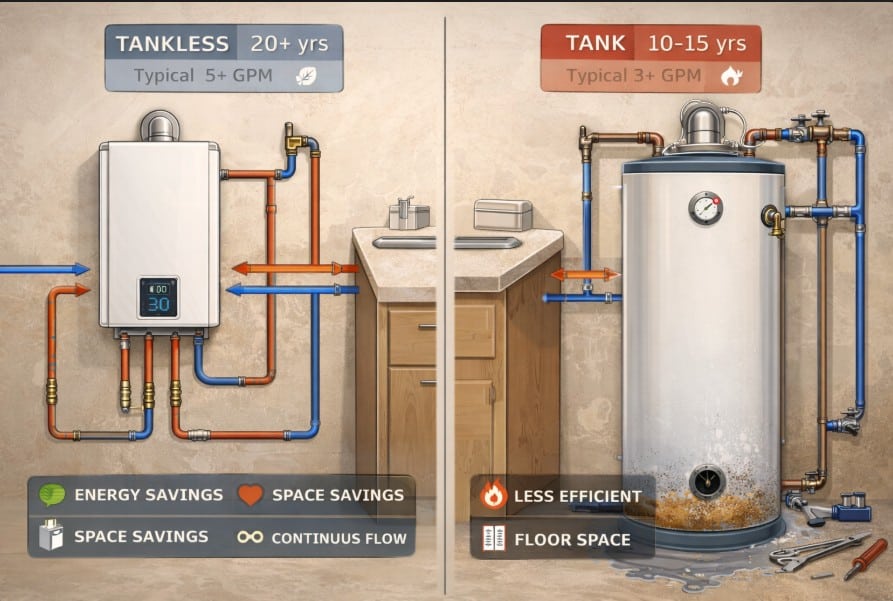
Deciding between a tankless water heater vs tank storage system is one of the most important choices a homeowner can make when upgrading or replacing their hot water system. Your decision affects not only your comfort but also your energy bills, maintenance requirements, and the long-term reliability of your home’s plumbing.
With newer energy-efficient technologies, rising utility costs, and stricter efficiency standards, understanding how each system performs in everyday use is more important than ever. Some homeowners prioritize energy savings, while others focus on continuous hot water or system longevity. Factors like household size, water usage patterns, and even local climate can all influence which system is the best fit.
This guide takes an in-depth look at costs, efficiency, maintenance, lifespan, flow rate, and performance to help you make a smart, informed choice. By the end, you’ll have a clear understanding of the pros and cons of each option, as well as practical guidance for selecting a water heater that meets your home’s needs today and for years to come. For professional guidance and support, consulting experts who provide HVAC services in Davenport, FL can ensure your water heater and home systems operate efficiently and reliably.
What Is a Tank Water Heater?
A tank water heater is the traditional type of hot water system found in most homes. It stores a set amount of water, typically between 40 and 80 gallons, in a large insulated tank and keeps it heated so that hot water is available immediately when you turn on a faucet or start a shower. This “ready-to-use” approach is simple and reliable, making it a popular choice for families who need multiple showers, dishwashing, or laundry done in quick succession. Homeowners interested in ongoing system protection may also benefit from service agreements to keep their water heater and HVAC systems running smoothly.
Types of Tank Heaters: Gas, Electric, and Hybrid
Tank water heaters come in three main types:
- Gas Tank Water Heaters: Heat water quickly and are ideal for homes with high hot water demand.
- Electric Tank Water Heaters: Typically cost less upfront and are easier to install, but may heat water more slowly.
- Hybrid Heat-Pump Tank Water Heaters: Use electricity efficiently by pulling heat from the surrounding air to warm water, reducing energy use while providing a steady supply.
Choosing the right type depends on your household’s hot water needs, energy source availability, and budget.
Tank Water Heater Lifespan & Maintenance
Tank water heaters usually last 10 to 15 years, but their longevity and efficiency depend heavily on proper maintenance. Over time, sediment and mineral buildup can accumulate at the bottom of the tank, reducing heating efficiency and putting extra strain on the system.
To keep your tank water heater operating at peak performance:
- Flush the tank annually to remove sediment
- Check and replace the anode rod every few years to prevent corrosion
- Inspect for leaks or rust regularly
Proper maintenance not only extends the lifespan of your water heater but also helps prevent unexpected breakdowns and costly repairs, saving both money and inconvenience in the long run. Regular upkeep works best when combined with AC filter replacements and other preventive measures for your home’s heating and cooling systems.
Water Heater vs Tankless
What Is a Tankless Water Heater? (Water Heater vs Tankless Explained)
A tankless water heater, also called an on-demand water heater, works very differently from a traditional tank system. Instead of storing hot water in a tank, it heats water instantly as it flows through the unit whenever you turn on a faucet, shower, or appliance. This water heater vs tankless design eliminates standby heat loss, meaning you only use energy when hot water is actually needed. As a result, homeowners often see lower energy bills and enjoy a continuous supply of hot water, provided the system is properly sized for their household’s needs.
Gas vs Electric Tankless Units
Tankless systems are available in gas and electric models, each with advantages depending on your home:
- Gas Tankless Water Heaters: Typically provide higher flow rates and are ideal for larger households or homes with multiple simultaneous hot water demands.
- Electric Tankless Water Heaters: Often more compact and easier to install, making them a good option for smaller homes, apartments, or point-of-use applications like a single bathroom or sink.
Proper sizing is essential. An undersized unit may struggle to provide hot water for multiple fixtures at once, while an oversized unit may be more expensive upfront than necessary.
Tankless Flow Rate: How Much Hot Water You Really Get
The flow rate, measured in gallons per minute (GPM), is a key factor in tankless system performance. It determines how many fixtures can operate simultaneously without a drop in temperature. Most residential tankless units deliver 2 to 5 GPM, but colder incoming water temperatures can reduce effective flow, especially in winter months.
Homes in cooler climates often require either a higher-capacity tankless system or multiple units to maintain consistent hot water across showers, dishwashers, and laundry machines. Understanding your household’s peak demand is critical to ensure your tankless system meets your daily needs without interruption.
By selecting the right unit and keeping up with routine maintenance, like descaling and cleaning inlet filters, tankless water heaters can provide efficient, long-lasting performance and significantly lower energy use compared to traditional tank systems. For best results, pairing your water heater care with air filtration and overall air conditioning system maintenance helps ensure a cleaner, safer, and more efficient home operation year-round.
Tankless vs Tank Water Heater
Tankless vs Tank Water Heater Comparison Table
Choosing between a tankless vs tank water heater involves more than just upfront cost. Understanding how each system performs in terms of efficiency, lifespan, flow rate, and space can help you make a decision that fits your home’s needs. The table below summarizes the main differences, followed by practical insights for homeowners:
| Feature | Tank Water Heater | Tankless Water Heater |
| Upfront Cost | $ | $$–$$$ |
| Installation Complexity | Moderate | Higher |
| Energy Savings | Low | High |
| Lifespan | 10–15 years | 20+ years |
| Flow Rate | Limited by tank size | Limited by GPM |
| Space Requirement | Large footprint | Compact |
Homeowner Tips:
- If your household uses multiple hot water sources at once (showers, dishwasher, laundry), pay close attention to the flow rate when considering a tankless system.
- Factor in lifespan when comparing total cost, tankless may cost more upfront, but typically outlasts a tank system by years.
- Smaller homes or homes with limited space often benefit from the compact design of tankless systems.
This comparison makes it easier to see which system fits your home, budget, and daily usage patterns, while keeping energy efficiency and long-term value in mind.
Energy Savings
Energy Savings: Why Tankless Units Are More Efficient
One of the biggest advantages of a tankless vs tank water heater is energy savings. Unlike traditional tank systems that constantly maintain a reservoir of hot water, tankless units heat water only when it’s needed, eliminating standby heat loss and lowering overall energy consumption.
Why Tankless Systems Are More Efficient
Many modern tankless water heaters achieve efficiency ratings above 90%, meaning that nearly all the energy used goes directly into heating water. By comparison, conventional tank systems typically operate at lower efficiency levels because they waste energy keeping water hot even when it isn’t being used.
Tankless water heaters can be 24% to 34% more energy efficient for homes using under 41 gallons of hot water per day. This efficiency can translate into significant cost savings on monthly utility bills, especially in households that use hot water frequently for showers, laundry, or dishwashing.
Practical Tips to Maximize Energy Savings
- Size your unit correctly: A tankless system that is too small will struggle to keep up with demand, while an oversized unit may be more expensive than necessary.
- Install low-flow fixtures: Reducing water flow helps your tankless system meet hot water needs without extra energy use.
- Regular maintenance: Descaling and cleaning inlet filters keeps efficiency high, particularly in areas with hard water.
By choosing the right tankless system and keeping up with routine maintenance, homeowners can enjoy continuous hot water, lower energy bills, and a reduced environmental footprint over the system’s lifespan.
Lifespan
Lifespan Comparison: Tank vs Tankless Water Heater
When comparing tankless vs tank water heater systems, one of the most important factors to consider is lifespan, since it directly affects long-term value and total cost of ownership.
Tank Water Heater Lifespan
Traditional tank water heaters typically last 10 to 15 years with proper maintenance. Over time, the tank can experience corrosion, leaks, and sediment buildup, which gradually reduce efficiency and performance. Homeowners may need to replace a tank water heater sooner if maintenance is neglected, which can result in unexpected costs and inconvenience.
Tankless Water Heater Lifespan
Tankless water heaters are built for longevity, often lasting 20 to 25 years when regularly maintained. Because these systems heat water on demand and do not store it, they experience less stress from constant reheating, reducing the risk of internal corrosion and other common tank-related issues.
Why Lifespan Matters to Homeowners
The longer lifespan of a tankless water heater means fewer replacements over the life of your home. While tankless units have a higher upfront cost, their durability, combined with energy savings and lower maintenance needs, can make them a smarter long-term investment. For families looking for reliable, continuous hot water, choosing a system with a longer lifespan can save money, time, and hassle in the years ahead.
Flow Rate
How Cold Weather Impacts Flow Rate & Water Heater Performance
For homeowners in cooler climates, understanding how cold incoming water temperatures affect your water heater is essential. Cold water requires more energy to heat, and this can significantly impact the performance of your system, especially if you’re considering a tankless vs tank water heater.
Tankless Water Heater Flow Rate in Cold Weather
Tankless systems rely on flow rate, measured in gallons per minute (GPM), to deliver hot water on demand. In colder regions, incoming water is much colder, which can reduce the effective flow rate and limit the number of fixtures that can run simultaneously.
To maintain consistent hot water in winter:
- Homes may require larger burners or higher-capacity tankless units.
- In some cases, dual-unit configurations can provide the necessary flow for multiple showers, appliances, and laundry at once.
- Proper professional sizing is critical to ensure your tankless system can meet your household’s peak demand without dips in water temperature.
Tank Water Heater Performance in Cold Climates
Traditional tank water heaters store hot water, so they handle cold water more predictably during short-term high-demand periods. However, they incur higher standby energy losses, as the tank must maintain a temperature around the clock, even when hot water isn’t being used.
Key Takeaway for Homeowners
Whether you choose a tank or tankless system, understanding your local climate, water temperature, and household hot water usage is essential. Proper sizing, professional installation, and routine maintenance ensure reliable performance, efficient operation, and extended lifespan, even in colder conditions.
Final Thoughts: Choosing the Right Water Heater in 2026
Deciding between a tankless water heater vs tank system is about more than just upfront cost. The best choice for your home depends on factors like household size, water usage habits, budget, and long-term goals.
- Tank water heaters are affordable, simple to install, and provide reliable hot water for everyday use. They are ideal for households that prioritize lower initial costs and straightforward maintenance.
- Tankless water heaters offer continuous hot water on demand, higher energy efficiency, and a longer lifespan, making them a smart investment for families looking to save on energy bills and reduce long-term replacement costs. Proper sizing ensures sufficient flow rate even during peak usage, and routine maintenance keeps the system performing efficiently for decades.
By weighing the trade-offs between upfront cost, long-term energy savings, maintenance needs, and durability, you can select a water heater that fits your lifestyle and home requirements.
For homeowners who want professional guidance, reliable installation, and honest recommendations, scheduling a consultation with experienced HVAC professionals ensures your water heater is correctly sized, installed, and maintained for years of worry-free service. sionals ensures your water heater is correctly sized, installed, and maintained for years of worry-free service. To get started, simply contact us today and schedule your consultation.
FAQs: Tankless Water Heater vs Tank
1. Which is better for a family of four?
Both properly sized tankless systems and larger tank water heaters can meet the hot water needs of a family of four. The key is understanding your household’s usage habits. For example, if multiple showers, laundry loads, and dishwashing often occur at the same time, a higher-capacity tankless unit or a larger tank may be necessary to maintain steady hot water.
2. Does a tankless water heater really save money?
Yes. While tankless units typically cost more upfront, their longer lifespan (often 20+ years) and higher efficiency usually result in lower total cost of ownership over time. Reduced energy waste and the elimination of standby heating in comparison to tanks help homeowners save on utility bills.
3. How important is flow rate in a tankless system?
Flow rate, measured in gallons per minute (GPM), is critical for tankless performance. It determines how many fixtures can operate simultaneously without a drop in water temperature. Choosing the right tankless system with an adequate flow rate ensures reliable hot water for showers, appliances, and laundry, especially in cold climates where incoming water temperatures reduce flow efficiency.
4. Which system lasts longer, a tank or a tankless?
Tankless water heaters generally last nearly twice as long as traditional tank water heaters. While tank systems typically have a lifespan of 10–15 years, tankless units can last 20–25 years when properly maintained, providing long-term value and reliability.
5. Is switching from a tank water heater to a tankless system complicated?
It can involve additional work, such as upgrades to gas lines, electrical systems, or venting. A professional evaluation is recommended to ensure your home can support the tankless unit’s requirements. Proper installation is essential to maximize efficiency, maintain flow rate, and protect the system’s lifespan.
6. Are there maintenance differences between tank and tankless systems?
Yes. Tank water heaters require periodic flushing and anode rod inspections to prevent corrosion and sediment buildup, while tankless systems need regular descaling and filter cleaning. Tankless units generally experience fewer catastrophic failures, which contributes to their longer lifespan.
7. How do cold climates affect tankless vs tank water heater performance?
Cold incoming water lowers the effective flow rate for tankless systems, so larger or dual units may be needed for peak usage. Tanks handle cold water more predictably but suffer higher standby energy losses. Proper sizing and professional installation are key in colder regions.